
The most iconic brands didn’t just market products. They created a personality that people instantly recognise, even when they aren’t constantly selling. What makes brands stay in people’s minds for years while others disappear as soon as you scroll past them?
The reason goes far beyond eye-catching logos, aesthetics, or catchy taglines. Strong brand presence is built by creating a clear, distinct identity and a consistent presence. An emotional connection further helps people naturally associate with your business. In the digital world, a sea of options and fast-shifting attention make this critical. Brands that are intentional, authentic, relatable and craft personal experiences are built for the long run.
Branding and creative direction shape how your business feels to your audience. From your website and social media to your messaging and visual identity, every single detail contributes to the story your brand wants to tell online. When done right, branding is not limited to making your businesses look visually appealing; it helps them become unforgettable, influential and credible in this attention-driven digital world.
Whether you’re launching a new brand, rebranding an existing business or strengthening your digital presence, effective branding helps to strengthen audience connection and long-term brand recognition. In the era of shrinking attention spans and constantly shifting trends, what makes brands timeless is a lasting perception it leaves behind that people connect with and naturally gravitate towards.
Understanding Branding and Creative Direction
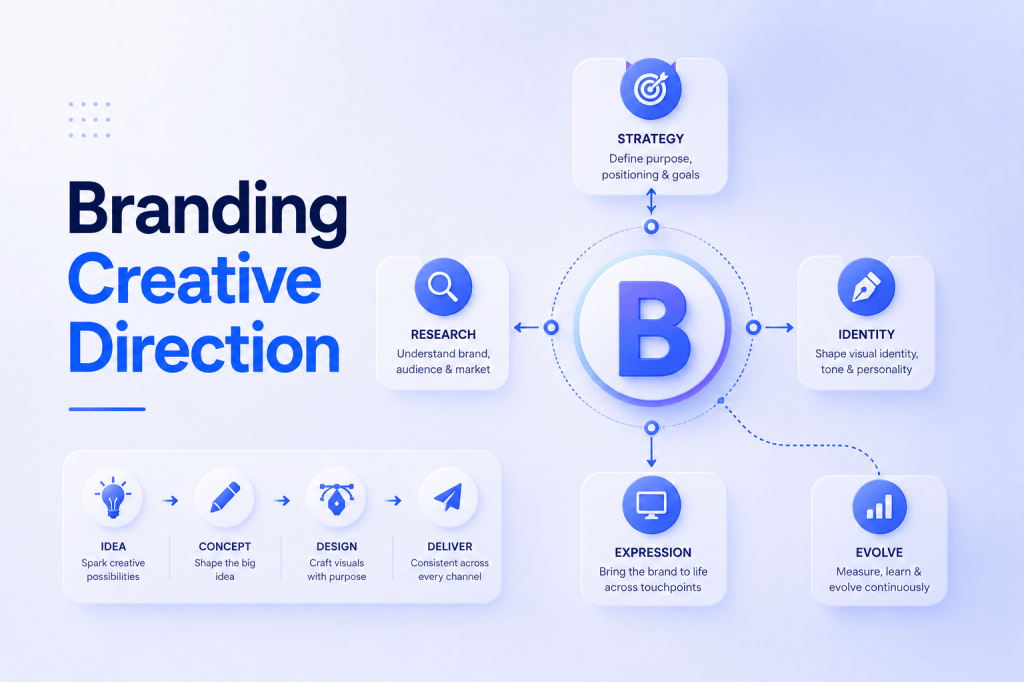
Branding is often confused with visuals alone, but branding goes much deeper than a logo or colour palette. It shapes how your business is perceived, remembered and associated with over time beyond the product or service itself . Whereas creative direction is what brings that identity to life visually across various platforms for customers to interact.
Branding Involves:
- Brand personality: Building brand personality, giving it a unique character that leaves an impression over time.
- Brand messaging: It gives the brand the tone in which it communicates, shaping narrative and messaging style.
- Brand positioning: Defines what the brand stands for and how it differentiates itself from others.
- Audience connection: Builds familiarity and emotional connection, paving the way for long-term customer loyalty.
- Recognition and recall: Creates a memorable identity that people associate with the business.
Creative Direction Involves:
- Visual identity and aesthetics: Defines overall visual appeal that represents the brand consistently.
- Design consistency across platforms: Ensures the brand feels cohesive across websites , social media, campaigns and digital experiences.
- Website and campaign visuals: Creates visuals that align with the brand’s persona and communication style.
- Typography, colours, imagery and style: Using design elements strategically to enhance brand recognition and perception.
- Creative execution: Translating brand strategy into visuals and experiences people interact with on a daily basis.
The Power of Brand Personality
You probably remember certain brands from your childhood, even if you haven’t interacted with them for years. That lasting connection comes from not the product they were selling, but from how they made you feel at the time. That’s the power of a strong brand persona. Ever wondered why people stay emotionally connected to certain brands long after interaction is over?
Because people are naturally drawn to familiarity, emotions, values and experiences more than just features or specifications. A product might solve a problem, but the spark only ignites when a brand has a personality people instantly relate to. That distinct character transforms a brand into an experience people instinctively connect with. That’s the power of strong brand personality and the reason why some brands stay iconic across generations.
The Core Elements of Brand Identity
All the great bands don’t just exist online; they own a certain feeling people instantly associate with. Such authority is built with intention through a combination of elements like positioning, communication and visual consistency. All these elements define how a business is presented, perceived and what makes it stand out like a familiar face in the crowd. While products and services evolve over time, a clear brand identity is what will make a business familiar, even when trends fade. A strong brand identity is what stands the test of time. At the core of every strong brand are the three defining elements:
Brand Positioning
- Communicates brand vision, value and purpose of the brand.
- Shapes a narrative to build brand perception.
- Defines how the brand stands apart from competitors.
- Helps target the right audience.
- Create a distinct place in the market.
Brand Voice
- Reflects the brand’s personality through communication style.
- Influence how the audience emotionally connects with the brand.
- Create a consistent content tone, giving it a unique touch.
- Builds authority and trust through interactions.
Visual Identity
- Includes logos, colour palette, typography and layouts.
- Creates visual consistency across all platforms.
- Influences first impression and recognition over time.
- Strengthens brand association and recall.
How Digital Trends Are Reshaping Branding
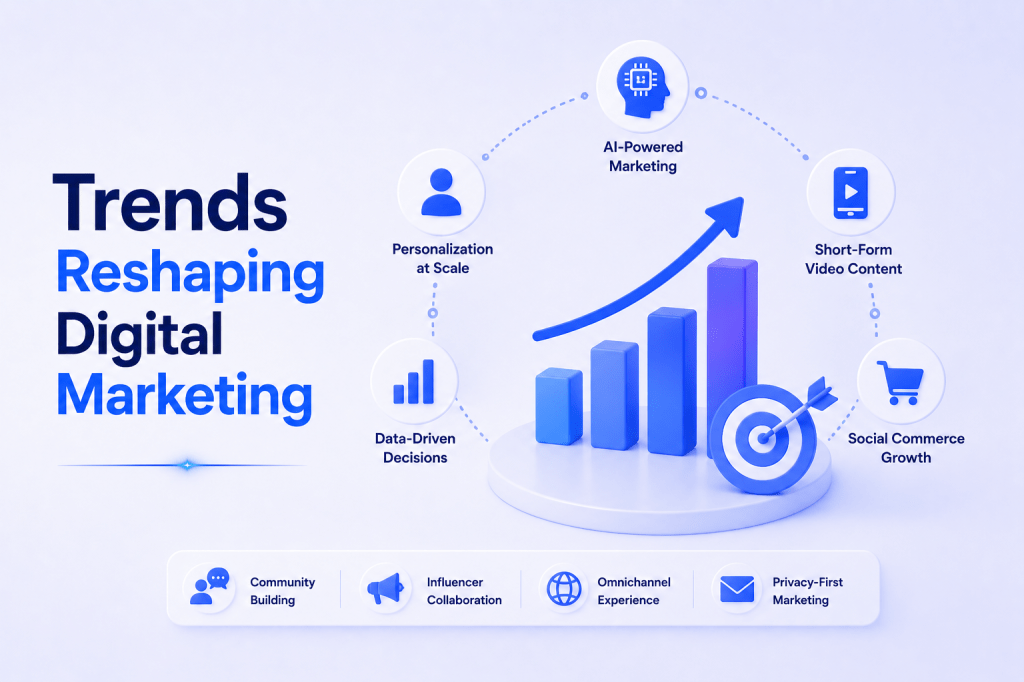
Digital culture has changed branding from traditional advertising into audience behaviour and experience. Digital behaviour, creator culture, AI-driven experiences, and shortened attention spans are changing how audiences discover, connect, and remember brands online. It now depends more on personalisation, relatability and experience you offer rather than constant promotion. Here are some key digital shifts currently reshaping modern branding:
- Short form content: Owing to the reduced attention span of the audience, brands are forced to create content that instantly captures and connects.
- Authenticity over perfection: The audience today prefers relatable content rather than overly polished content selling unrealistic standards.
- Influencer culture: Creator-led branding today has become more popular because the audience prefers authentic recommendations from people they already trust and follow over highly scripted advertising.
- Personalised branding: Audience is becoming more inclined towards brands that craft a tailored experience for every customer based on their interests and behaviour.
- AI-driven personalisation: This is one of the major shifts reshaping modern branding, helping businesses predict user behaviour based on data analysis in real time to deliver more customised experiences.
How to Build Strong Branding and Creative Strategy in 2026
People consume a lot of content every day, which is why most brands are forgotten right after the scroll. That’s exactly why branding strategy in 2026 should be more than just competing for visibility. Audiences today are more inclined towards brands that give them a personalised experience instead of focusing on mass advertisement. To shape strong branding, brands need to focus on key factors that keep them relevant in this ever-evolving digital world.
- Recognition beyond logos: Build branding strong enough that the audience recognises the brand through its tone, visual style and overall presence before even noticing the logo.
- Consistency across every touchpoint: Ensure all platforms, website, packaging and advertisement all feel visually and strategically connected.
- Clear representative direction: Every visual, campaign and design choice should reinforce the same brand personality instead of following trends as per every platform.
- Audience first brand experiences: modern branding should feel relatable, interactive and built around audience behaviour rather than one-way promotion lacking engagement.
- Distinct visual language: Create aesthetics, typography, layouts and designs that are unique to your brand and instantly associated with it.
- Personality-led branding: build a brand persona through storytelling so that the audience emotionally connects with it instead of just focusing on the product or service alone.
- Trends adaptation without losing identity:Evolve creatively with the changing digital culture while maintaining the core identity people already recognise.
- AI-powered personalisation: Use AI and audience insights to create more tailored and precise brand interaction across platforms, all in real time.
- Community-driven branding: Strong brands in 2026 make their audience feel involved and part of the brand through comments, reposts, consumer stories, creator partnerships and online communities rather than making them feel like passive consumers.
Where Recognition Lasts
In the digital world of fleeting trends, attention may disappear quickly, but branding that manages to stir emotions and give the audience a customised feel is the brand people carry with them even after the interaction is over. No matter how much the digital landscape evolves, one thing that continues to stay timeless is the human touch.
From brand personality and creative direction to storytelling, personalisation and customer interactions, modern branding is centred around crafting an experience based on audience behaviour so that branding feels more than just a mere promotion. To survive the fast paced digital world, a brand needs to build a sense of belonging in the audience over temporary attention. Because while people may forget the campaigns, trends or advertisement but, they rarely forget brands that made them feel seen and personally connected.
 Marketing Makes It
Leave a comment