Here’s the thing: the scroll is brutal, so your content should be strong enough to halt it. Every day, the digital space is flooded with content, be it blogs, reels, or posts, all competing for just a few seconds of attention. And that’s all you get to either stand out or get lost in the noise.
That’s exactly why how you say things matters just as much as what you say. People rarely read—they react. Strategic content pinpoints what your audience wants to read, see, or hear. Copywriting determines how to say it so the message is clear, engaging, and worth attention.
Content strategy has moved past just keywords; now it’s also about saying what the audience needs to hear before they lose interest and move on. Visibility alone wouldn’t save your content; it still needs people to stay. To become a brand that is not just seen but remembered, it takes both strong content and copywriting done right. This blog gets into how to put both into action the right way.
What is Strategy Content and Copywriting
Before diving into the tactics of it, let’s break down what both terms imply. Strategic content and copywriting may be different, but together they complement each other, paving the way for content that delivers results.
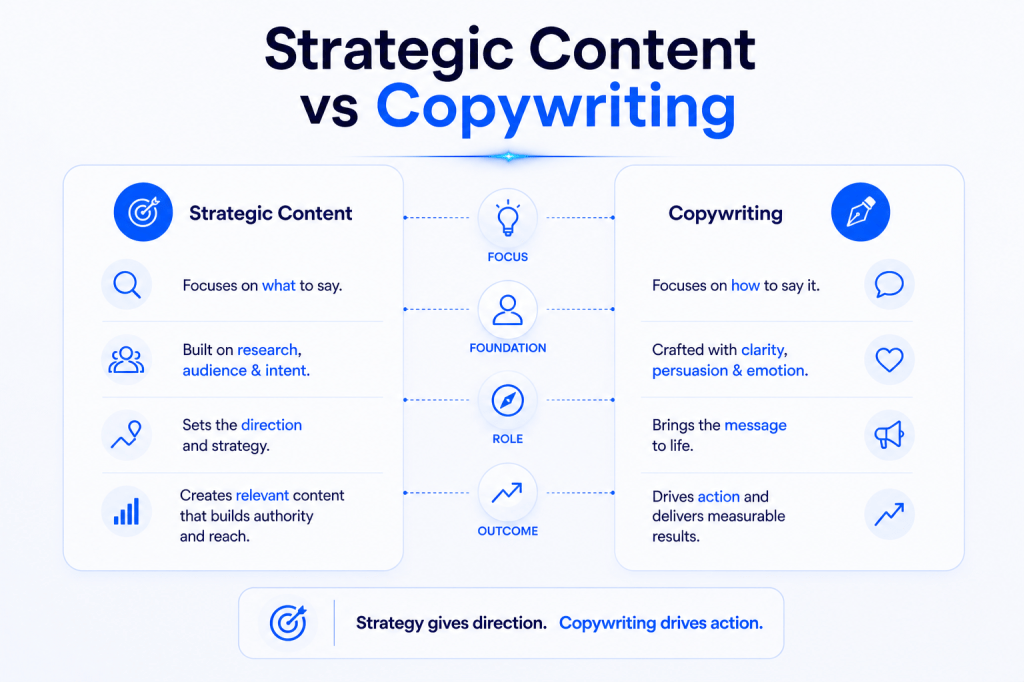
Strategic Content: This is the thought behind your content that’s gonna bring it to life. It ensures that whatever you say is something that matters to your audience.
- Determines what topics to cover based on audience interest and needs.
- Focuses on what the content needs to achieve and who it’s intended for.
- Aligns content with relevance and search intent.
- Gives content a structure, direction and purpose.
Copywriting: Copywriting guides how your message comes across. It ensures your content engages the audience.
- Shapes how the message is to be conveyed and presented.
- Improves clarity and sets the right tone for your audience .
- Makes content engaging and relatable.
- Helps your content feel more relatable and worth engaging.
Why Most Content Falls Flat
You invest time in creating content, but people scroll past like it wasn’t even there. In seconds, people decide what’s worth their attention. Your content has seconds to matter before it vanishes in thin air. Therefore, it’s high time to rethink your content strategy because most content doesn’t fail on efforts; it fails on impact.
Common Content Pitfalls
- Lack of Clear Strategy: Content is created without clear goals and direction, making it random and disconnected.
- Ignoring Search Intent: If the content doesn’t match what people actively search for, it often fails to attract the target audience.
- Lack of Clarity in Messaging: The content is loaded with too much information, taking away the focus from the main message, lowering its impact.
- Writing for Algorithms, Not Audience: Too much optimisation makes content feel robotic, stripping away the human element and reducing engagement.
- Weak Hook: Without a compelling opening, the content gets ignored within seconds.
- Overuse of Generic Language: Excessive use of generic words makes content look repetitive, losing originality and making it hard to stand out.
- Poor Structure and Formatting: Dense paragraphs without a clear flow make readers struggle to understand and engage.
- Unclear Content Value and Call to Action: When readers don’t see what they’ll gain, they move on. And, without a clear call to action, the content fails to convert.
How Strategy and Copy Work Together
To create content that leaves an impact, strategy and copy need to work side by side. Think of creating content as a simple workflow where strategy starts the process by defining the message and identifying who it should reach. It gives your content a direction and aligns with what your audience expects. From there, the copy takes over, shaping the message into something people instantly relate to and engage with. When both are aligned together, they turn content that cuts through noise and gives people reason to connect.
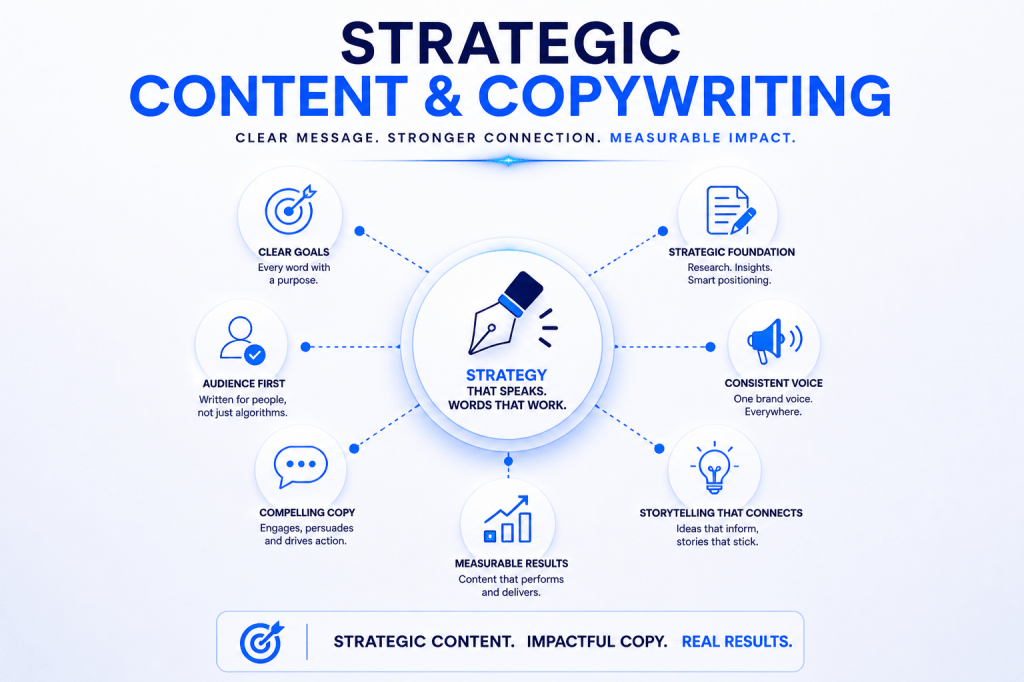
The Workflow Behind Content That Works
- It starts with clarity: Before creating any piece of content, clarity of thought is pivotal. Understanding of what the purpose of the content is and who’s gonna consume it, and that is achieved with a well-defined content strategy.
- Then comes the core idea: Rather than focusing on too many ideas, pick one core idea and build your content around that, keeping the message focused and easy to follow.
- Next, the copy steps in: The way an idea is communicated makes all the difference. From the way it is introduced to how it’s carried through, strong copy keeps people hooked, while a weak execution can get the finest content ignored.
- From here, it’s about how it flows: Flow is about how smoothly your content connects, and that comes from clear structure, relevant ideas and natural flow throughout the content that makes the audience engaged until the end.
- And finally, it leads to action: Well-crafted content turns attention into managing full engagement, leading viewers to take actions like exploring your website, signing up, or making a decision.
How to Create Content That Stops The Scroll
This is the step where everything gets real. After understanding strategic content and copy thoroughly, it’s important to make use of the same to drive results out of your content. So far, creating good content comes down to a few key decisions, such as how you build the hook, clear communication and relevant ideas.
Here’s How It Actually Works
- Hook Attention Instantly: The first few seconds matter whether it’s a headline, hook or visual. Give people a reason to stop. If it doesn’t catch attention instantly, nothing after it matters.
- Build On One Core Idea: Don’t try to say too much in a single piece of content, keep the content centred towards one clear idea that’s easy to understand, remember and act on.
- Make the Content is To Consume: Whether it’s a video, visual, or text format, try to make the content structure clean and well organised, making the content flow smoothly.
- Keep the Tone Natural and Relatable: Your content shouldn’t feel robotic, which sounds too polished and forced, breaking the connection. Instead, keep it natural and human for that instant connection.
- Maintain a Consistent Flow: Each part of the content should naturally lead to the next. The audience shouldn’t feel disconnected or figure things out on their own.
- Highlight the Value From the Start: Your audience should, from the very beginning, understand why this content is worth their time and what they’ll gain out of it.
- Clear Call to Action: Make the next step clear so your audience knows what to do next and feels engaged.
Platforms for Strategic Content and Content
The right set of tools and platforms makes the process way faster and smarter. From planning what to say to optimising your content, these platforms help bring strategy and copy together in a more effective way.
Platform for Content Research and Strategy
- Google Trends: Helps you understand what people are actively searching for and what topics are gaining traction.
- SEMrush: Useful for keyword search, content gaps and competitor analysis.
- AnswerThePublic: Shows questions your audience is asking, making it easier to align with intent.
Writing and Copy Development
- Grammarly: Improves grammar, clarity and readability.
- Jasper AI: Helps generate copy ideas, refines messaging speeding up content creation while keeping tone consistent.
- ChatGPT: The go-to for versatile brainstorming, idea generation and strategy planning.
Content Planning and Organisation
- Notion: Helps organise ideas, content calendars and workflows in one place.
- Trello/ Asana: Useful for managing content production and keeping everything on track.
Optimisation and Performance
- Surfer SEO: Helps optimise content for search in real time based on live search data.
- Google Analytics: Tracks how your content performs and where improvements can be made.
What This Really Comes Down To
Content isn’t hard to create in today’s time, but creating real buzz around it is for sure. The challenge is making content worth paying attention to in a space where everyone is competing for the same few seconds. Attention doesn’t come from doing more; it comes from doing what’s right for you and your audience. When the thought behind the idea is clear, and the way it is expressed feels natural, your content starts to connect with people. That’s what shifts content from being just another post online to something that matters to your audience. Because attention isn’t random, it’s intentionally earned with the right strategy and a solid copy. And when those are in place, your content doesn’t chase attention; it starts to attract it.
 Marketing Makes It
Leave a comment