
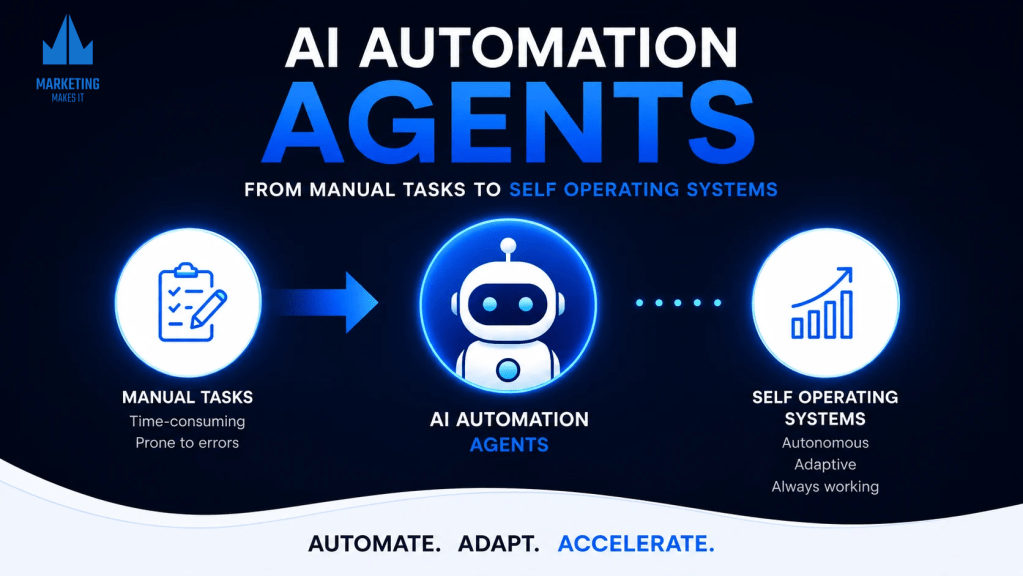
For the longest time, automation was all about setting up repetitive tasks, linking tools, and keeping manual checks on each and every task to ensure smooth functioning. But times have changed, and so have the way businesses perceive automation. Today, with more and more advancements in technology, automation has taken a major leap with the integration of AI into automation systems, making the workflows far faster, smarter, and independent. AI automation has changed the way workflows function; it has made the process more efficient by reducing time and effort with systems that have the ability to observe, think, and act and keep the workflow in motion on their own. What once used to be labour-intensive tasks have now evolved into intelligent workflows that run your business on their own, with minimal human involvement only where it matters, so your teams can shift their focus on high-value decisions like innovation, creativity, and building strategies that take your business to new heights.
The most common question that arises is how smoothly your systems are going to run without constant team intervention. Well, that’s what the new era of automation is all about, allowing your teams to step away from repetitive tasks while AI agents take the lead, keeping workflows moving forward.
This shift is not just an operational upgrade; it is how modern workflows are defined today. Because when workflows are on autopilot, your team can work on ideas that can help your business scale.
AI Agents in Automation: The Brain of Self-Operating Systems
Technology reducing human effort isn’t something new for businesses, and AI being incorporated in automation systems is just the cherry on the cake that has unlocked a wide range of possibilities. Earlier automated tasks were limited and repetitive, which needed constant human intervention, but with AI being part of the automation, it has changed the way traditional automation worked, with AI-integrated automation not only is human efforts reduced but also the need of constant intervention of teams have also been completely removed. This transformation has proven to improve workflows by making them way more efficient and intelligent than they ever were.
What AI agents offer to keep the systems running smoothly:
- Understands the nature of the business workflow and automates according to context.
- Makes decisions in real time as per need, triggering the required next action without any intervention.
- Manages cross-platform tasks all at once from emails, customer relationship management (CRM), project tools and internal systems.
- Reduces human errors, especially in repetitive tasks.
- Continuous workflow automation with the help of performance insight tracking.
- Autonomous process management with minimal human oversight.
These abilities and more of AI have built an effortless workflow ecosystem that has become an inseparable part of every modern business. Now the question is not about whether to integrate AI into automation, it is about how to make use of it to its best ability.
How to Use AI Agents: Turning manual processes into independent operations
AI agents are like your smart workflow companions that can handle the repetitive tasks that take away your time from more important tasks like strategy, understanding customer behaviour, and business growth. With AI-powered automation, this is not the case anymore. AI-automated systems look after your entire operations, like responding to real-time signals from emails, customer support systems, and project management systems. Based on real-time inputs, they decide and execute tasks and keep repetitive tasks moving smoothly.
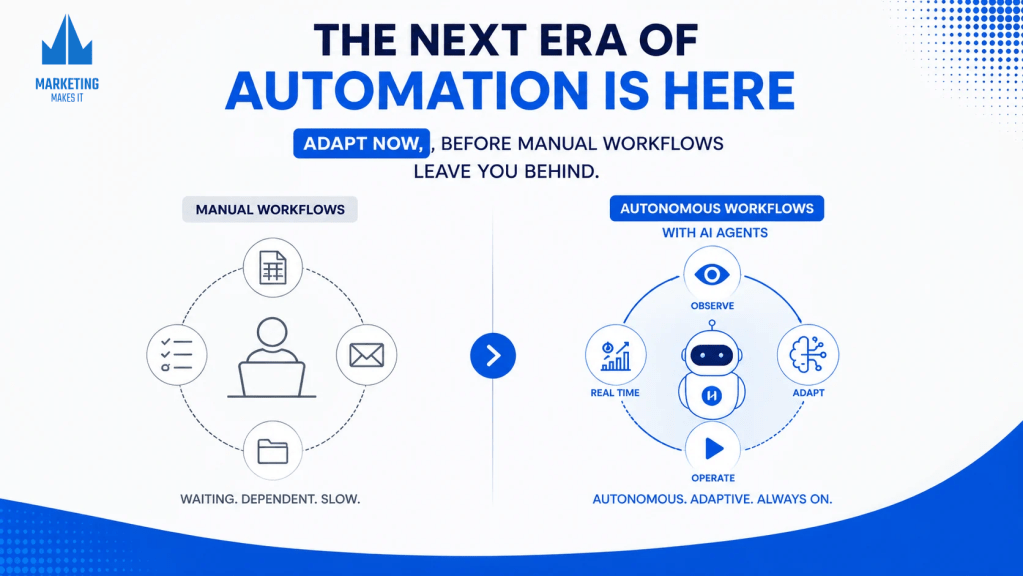
Common tasks that AI automates:
- Email Automation: personalised emails to every customer with automatic follow-up emails to generate leads
- Chatbots: answer queries, forward complex tickets for expert support to the right teams in real time
- CRM Workflows: update customer records, score leads, and assign sales tasks
- Audience Targeting: target the right audience in real time for better campaign performance
- Content Optimization: adapt and optimize content across platforms for better engagement
- Task Reminders: schedule tasks, send alerts, automate follow-ups, and manage internal notifications
- Approval Requests: move requests for approval automatically to the concerned teams
- Budget Management: track spending, allocate budgets, and optimise resource distribution
- Tracking and Reporting: generate dashboards and performance alerts
- Optimize Repetitive Tasks: using real-time data insights, tasks are optimized accordingly.
Getting Started With AI Agents: The Right Tools and Platforms
Choosing the right AI agents for your workflows becomes easier when you understand where they can create the most impact in alignment with your business goals. Start with automating repetitive, time consuming tasks like follow-ups, reporting, tracking, approval, and campaign execution. Once the basics are figured out, you can move on to selecting the right tools and platforms that help your team automate decision-making and connect systems for smoother functioning. With the right set, AI agents can transform your workflows into intelligent systems that adapt, make decisions, and take actions all at once in real time.
Here are some AI agents and platforms that power them:
- Workflow Automation Platforms
These platforms help you connect your tools and build AI-powered automations without any extensive development work to manage end-to-end operations.
- n8n: an open-source platform with a Node-based approach for custom AI logic and developer-friendly use cases.
- Zapier: a no-code automation platform with numerous integrations and a beginner-friendly setup.
- Make: a visual automation builder for custom flows.
These platforms are best for:
- Email automation
- CMR updates
- Task scheduling
- Tracking and reporting
- Approval chains
2. Top AI Agents Platforms: Smarter Execution
These platforms help in creating AI agents that make decisions and act on them independently.
- Tasked: AI-powered project management and collaborative agent.
- Salesforce Agentforce: AI agent for CRM, sales, and operations.
- Relay:Customer journey automation with AI-based decision-making.
These platforms are best for:
- Customer support
- Sales automation
- Project execution
- Internal task management
3. AI Marketing Tools: To Power Campaign Automation
These tools focus on marketing-specific automations like content, audience targeting, and ad optimisation.
- Jasper: AI content agents for blogs, campaigns, and brand messaging
- PhantomBuster: automates generation and social media automation
- AdCreative.ai: ad creative generation and performance optimisation
These platforms are best for:
- Content optimization
- Lead generation
- Campaign execution
- Audience targeting
How to choose AI agents as per your business goals:
Before choosing the platform, make sure it aligns with your automation goals.
- Integration support with email, analytics, or other support tools
- Security and privacy controls
- Ease of use with no-code or low-code platforms
- Cross-platform automation support
- Real-time decision-making capabilities
Benefits of AI Agents for Business Automation
- Faster Operations: Processes that once were time-consuming now happen in seconds.
- Reduced Human Dependency: Manual oversight is no longer needed for every task.
- Accuracy: With AI agents, there are low chances of errors with tasks and execution.
- Workflow Continuity: Self-operating systems keep working even after office hours.
- Smarter Scalability: Systems adapt as per the task volume in real time.
Future of AI Agents in Automation: The Next Leap
As the evolution of technological advancement continues, so will the shift in the abilities of AI agents in automation. The next wave will not just be about repetitive task automation but about collaborating different AI agents for different tasks into one ecosystem where they work together as a digital team to seamlessly manage end-to-end operations.
What can we expect next from AI-Powered Automation:
- Multi-agent collaboration: Where task-specific agents coordinate to execute overall operations.
- Smarter systems that fix errors on their own and restore functionality.
- Introduction of industry-specific AI agents, such as healthcare, banking, and e-commerce.
- Teams are creating their own custom AI agents without depending on developers.
In the near future, AI agents will become the default automation of modern business systems. As systems will continue to become more autonomous and smarter than before, businesses that will make the shifts alongside the advancements in AI agents will lead the new era of digital evolution.
 Marketing Makes It
Leave a comment