
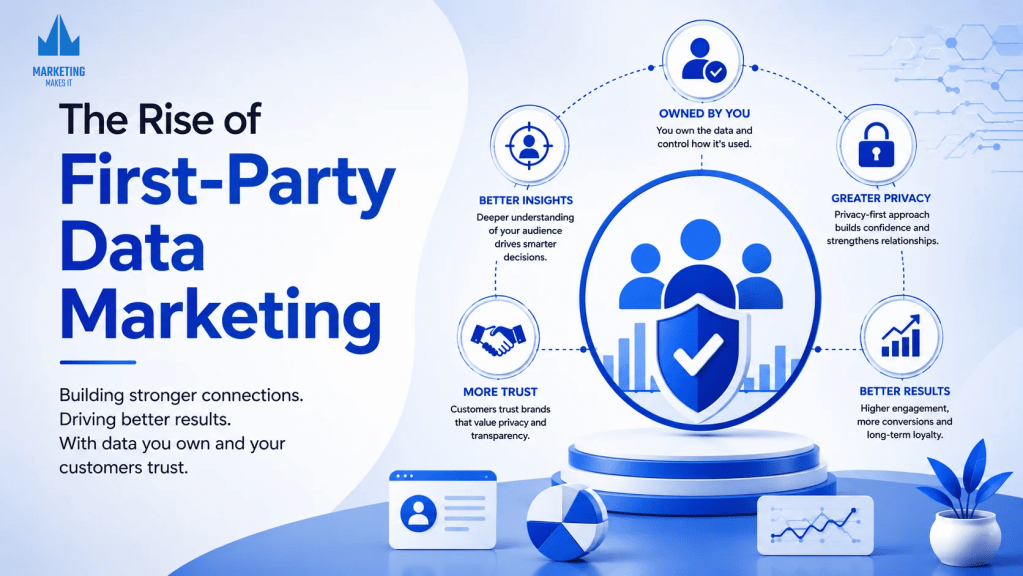
With stricter privacy regulations and the decline of third-party cookies, brands can no longer rely on traditional marketing strategies. They are being pushed toward a significant shift in digital marketing.
This transformation explains why first-party data marketing is gaining momentum, prompting brands to reconsider how they understand and reach customers online. Rather than relying on external sources for insights, brands are now collecting data directly through their websites, apps, subscriptions, and interactions.
Apart from just a privacy-driven trend, first-party data is also becoming a building block for personalised marketing and stronger customer relationships. As marketing is becoming privacy-first and user behaviour-driven, brands are increasingly moving towards investing in owned data ecosystems to build more trust, improve customer experience and stay in sync with the ever-evolving digital trends.
What is First-Party Data
First-party data is basically the information brands collect directly from users who genuinely interact with them through owned platforms and interactions. Every time someone visits a website, signs up for a newsletter, fills out a form, makes a purchase, downloads an app or engages with a brand online, they leave behind valuable insights about interests, preferences and behaviour.
This data can include:
- Website activity and browsing behaviour.
- Purchase history and customer preferences.
- Demographic information.
- Customer Feedback
- Survey data, form submissions
- App downloads and usage
- Email subscriptions and sign-ups
- CRM records and customer journey
Why Brands Are Moving Beyond Third-Party Data
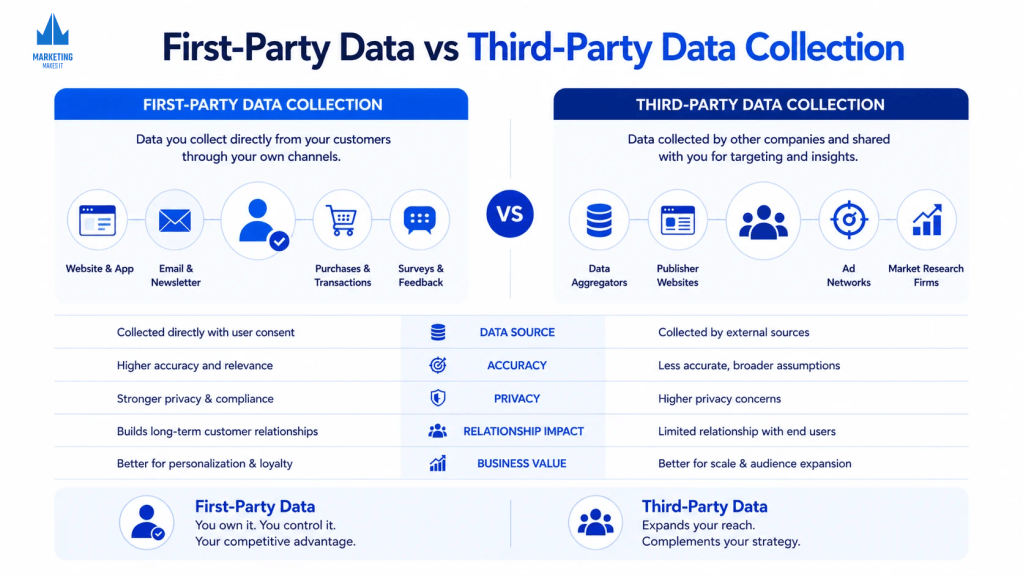
For years now, brands have heavily relied on third-party data collected through cookies, advertising networks and external platforms that track user behaviour across multiple websites and apps. However, with growing concern over privacy and the implementation of new data privacy laws, brands are moving towards directly gathering information from their audience.
Why the Shift:
- Third-party cookies are slowly vanishing.
- Privacy regulations are becoming stricter day by day.
- Consumers are demanding more transparency and data control.
- Brands want more accurate customer insights.
- First-Party data offers a more personalised customer experience through owned platforms to collect customer insights.
- Offers consumers more data controls by allowing them to consciously choose what information they share through any form of interaction.
How First-Party Data Collection Works:
First-party data collection works through tracking and analysing how users interact with a brand’s own digital platform. Whenever someone engages with the website in terms of visits, clicks, purchases or sign-ups, tracking codes and analytics tools help record those interactions as user behavioural data, like what they are searching for, which pages or products they interacted with, how much time they spent on the website or what content drives engagement. Basically, the entire customer journey is tracked.
This data is collected through small code snippets and is stored within owned systems like CRM platforms and analytics tools to interpret customer behaviour for improved personalisation and to improve marketing strategies. Moreover, first-party data stays within the brand’s own ecosystem, making it more accurate, privacy-focused and trustworthy.
Process Behind First-Party Data Collection:
- Tracking pixels and analytics tools monitor user interactions.
- Website activity and browsing behaviour are recorded.
- Customer actions like visits, clicks, sign-ups or purchases are analysed.
- Data gets stored within CRM and owned customer systems.
- Insights are used to understand customer behaviour to make a personalised customer experience.
- Brands get to build direct customer understanding through first-party data.
How First-Party Data is Reshaping Customer Experience:
In this era of digital personalisation, customers no longer want a generic marketing experience. From personalised recommendations and targeted emails to customised content and product suggestions, users today expect brands to understand their needs and preferences in real time.
That’s exactly why first-party data becomes of utmost importance. Since the data comes directly from consumer interactions, brands can craft more accurate, relevant and behaviour-driven experiences instead of relying on rented audience data that may or may not be as accurate.
How It Improves Personalisation:
- Helps deliver more relevant products and content recommendations that are unique to each customer.
- Creates personalised customer journeys.
- Improves email targeting and customer engagement.
- Helps brands understand customer preferences more accurately.
- Enhances user experience across websites, apps and platforms.
- First-party data is more secure and privacy-focused, making it more reliable.
How to Build a Strong First-Party Data Ecosystem
Brands are slowly drifting away from third-party data dependency, which means it is essential to build a solid first-party data collection ecosystem for improved marketing strategies. Brands need a connected system that gathers, organises, and analyses customer data across every owned platform, unlike a third-party ecosystem with scattered customer information.
A strong first-party ecosystem allows brands to build more transparent and secure customer relationships while delivering more tailored and constant, driven digital journeys.
What Brands Need to Prioritise:
- First and foremost, the step is to shift from relying on rented third-party audience data to building owned customer ecosystems that allow direct customer interactions.
- Set CRM and analytics tools to organise and analyse customer behaviour to deliver customised results to every customer.
- Create newsletters, loyalty programs and exclusive communities that encourage users to willingly share information.
- Use surveys, quizzes and interactive experiences to collect customer insights naturally.
- Prioritise transparency and consent-driven practices to build customer trust.
- Ensure marketing strategies always stay aligned with evolving privacy regulations and compliance standards.
- Build a clear customer data management framework system for how customer data is collected, stored and managed while protecting their digital privacy.
- Continuously audit and optimise data collection strategies based on changing customer expectations.
- Unify customer data from across platforms like websites, apps or emails to build connected customer journeys and reduce data fragmentation.
Challenges Brands Face in Privacy First Era:
Customer data is no longer just a marketing asset. As consumers become more aware of how their data is used online, it has now become a matter of trust and transparency for long-term brand credibility. Hence, it is becoming a challenge for brands to figure out how to become more transparent about how customer data is collected and used.
Key Challenges:
- Stricter privacy policies and compliance regulations have forced brands to change their way of data collection.
- Declining reliability of third-party cookies due to fragmented data collection and privacy concerns.
- Growing concerns and apprehension of customers around sharing personal data without transparency and data control.
- Third-party data makes the data collection process more fragmented as it collects information using external sources from multiple platforms, and hence, it is less accurate.
- Balancing personalisation with ethical data practices without compromising customer trust.
The Future of Privacy-First Marketing
With a shift towards first-party data collection, it is clear that the future of marketing will be defined by trust as much as personalisation. Data privacy is no longer just a regulation; it is becoming the defining factor of your brand’s marketing strategy. As AI and digital technology is going to advance, brands are going to face greater responsibility around how user data is collected, managed, and protected as data collection will become more advance making transparency and trust more important than ever.
Privacy-first approach is not some fleeting trend; it is a long-term business asset that will become the foundation of credibility both in the present and future of the digital era, where data acts as the connecting link between the brand and the customers. Although first-party data is becoming the focus of modern marketing, third-party data still continues to play a role in areas like audience discovery, broader campaign reach and market insights. The point here is not about abandoning one approach in order to adopt a new one.
Whatever the source of data collection might be, it is important to understand that customer privacy and trust are of paramount importance in this data-driven digital marketing. Therefore, while it is important to keep up with a constantly changing digital scenario, the key to credibility lies in the transparency you offer to your customer.
 Marketing Makes It
Leave a comment